
Offshore operations live with a daily mismatch: small, time-critical items still travel on transportation built for people and heavy cargo. A 20 to 30 pound replacement part going 50 miles offshore often triggers either a crew transfer vessel that takes hours and costs thousands, or a helicopter that moves fast but can cost dramatically more per flight hour.
Neither option scales cleanly for the kind of deliveries offshore sites need most often. The real volume isn’t one emergency run a month, it’s dozens of routine deliveries that quietly become a major annual line item.
That frequency turns “getting a part out there” into an operational drag. When the only tools available are oversized for the job, the cost shows up in downtime, scheduling friction, and a logistics budget that never really stays contained.
Why Drones Solve This Specific Problem
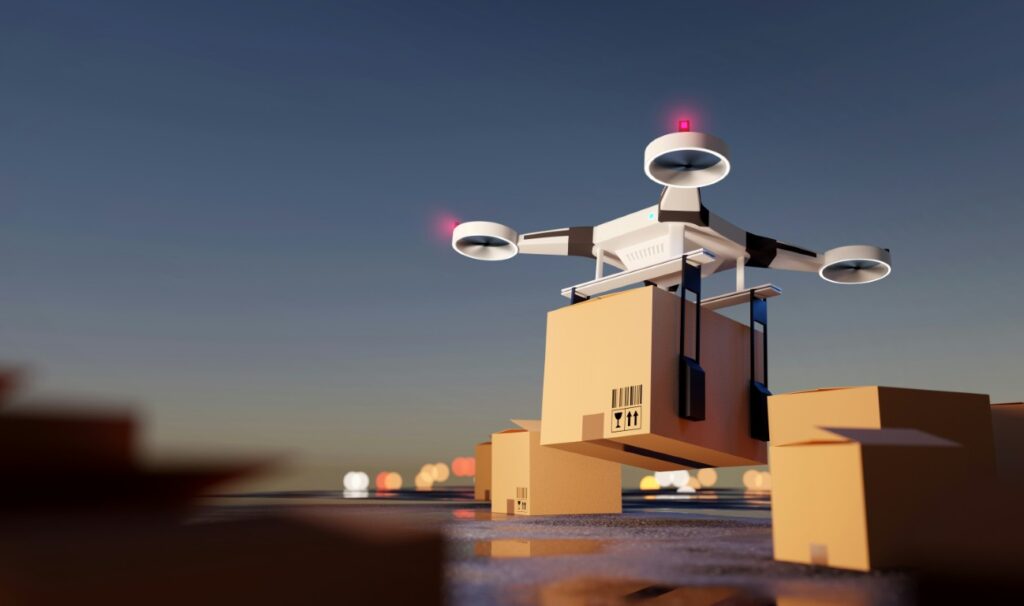
Long-range autonomous drones fill the missing middle layer between boat and helicopter by matching the transport method to the cargo. A delivery UAV carrying a few dozen pounds can fly offshore, complete the drop, and return without putting a pilot on board and without booking an entire vessel run for a small package.
This isn’t theoretical. In an offshore wind logistics trial involving RWE and Skyways, the drone deliveries replaced trips that took at least an hour by boat with missions completed in under 30 minutes.
Over the course of that three-week series, the aircraft flew more than 2,500 kilometers and logged more than 65 hours of flight time, delivering time-critical parts to turbines at the Arkona wind farm in the Baltic Sea.
That kind of result reframes the question for offshore operators. The debate stops being whether drone delivery can work, and becomes which platform and which manufacturer can support the reliability bar offshore requires.
Why Offshore Operators Are Favoring U.S. Manufacturers
Offshore energy sits close to critical infrastructure, and many operators have procurement constraints that go beyond simple cost comparisons. For some teams, especially those supporting defense-adjacent projects or operating near sensitive assets, a U.S. manufacturing footprint can simplify compliance and security review.
There’s also a capability pipeline effect. Many of the more capable long-range autonomous cargo systems in the U.S. were accelerated through defense-oriented development, which tends to pressure-test autonomy, reliability, and operational discipline in a way that consumer drone lineages do not.
Skyways has publicly described a $37 million U.S. Air Force award through AFWERX to transition its V3 aircraft from prototype toward production, which is the kind of development backing that typically forces a platform to mature quickly.
Finally, there’s a practical regulatory factor. Domestic manufacturers operating in the U.S. tend to build direct experience with the FAA’s evolving pathway for beyond-visual-line-of-sight operations, and that matters because offshore flights over water still demand careful approvals and disciplined operations.
What The Platform Actually Has To Do Offshore
Offshore delivery isn’t “delivery, but farther.” The environment adds salt air, high winds, moving landing surfaces, and very little tolerance for navigation error, so the platform requirements are unusually specific.
Vertical takeoff and landing capability is the first constraint. There are no runways on platforms or turbines, which pushes operators toward VTOL or hybrid VTOL configurations that can hover precisely and then cruise efficiently once en route.

Range is the second constraint, and it’s where many generic drone solutions fall apart. Offshore sites can sit 50 to 200 miles from shore, and sustaining those round trips with meaningful payload often requires hybrid-electric design choices that extend endurance without losing the control advantages of electric flight systems.
Payload sounds simple until you tie it back to the routine reality of what actually gets moved. Most of the recurring, high-impact deliveries offshore fall into a modest weight bracket, and the platform has to carry that weight without destabilizing the flight profile or collapsing the range you’re buying the system for.
Skyways has described its current V2.5 as designed around roughly 30 pounds of payload with a long-range profile, and it has positioned the upcoming V3 around heavier payload categories and longer reach.
Autonomy is what turns this from a demo into infrastructure. Offshore routes are repetitive and predictable, and the goal is to make them routine and repeatable rather than staffing every sortie like a bespoke operation.
Where This Is Heading Next
Offshore wind and oil and gas are a proving ground because the pain is obvious and the economics are unforgiving. Once a system can deliver reliably across open water to hard-to-access assets, the same approach maps to maritime resupply, remote medical logistics, disaster response, and island-to-island transport.

RWE has discussed ambitions to incorporate drones into a hybrid supply chain alongside crew transfer vessels, which is another way of saying the drone becomes a standard logistics layer rather than a novelty tool.
Defense logistics is moving in a similar direction, with programs focused on autonomous cargo delivery to reduce cost, speed up resupply, and remove unnecessary risk from routine missions. The trajectory is clear: autonomous delivery is moving from trial phase toward operational infrastructure in the environments where roads don’t exist.
Picking A Manufacturer Is The Real First Decision
Offshore logistics has been waiting for a transport method that matches the size and urgency of the cargo it moves most often. Autonomous drones can finally fill that gap, but success offshore depends on more than a compelling flight demo.
This isn’t about replacing boats and helicopters, it’s about right-sizing the routine deliveries that never should have required them in the first place. The decision starts with the manufacturer’s track record, platform fit, and proof that the system performs in harsh conditions where reliability is the entire point.
