
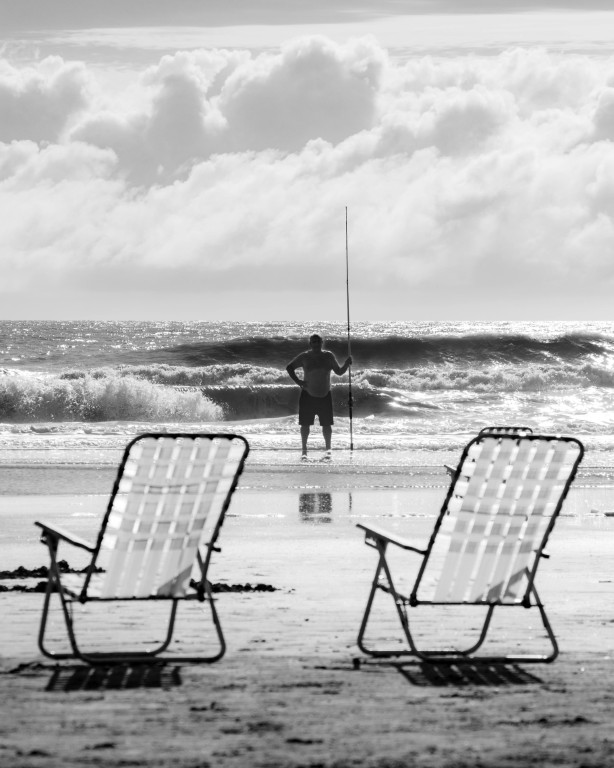
Good morning, Sanbornians! I’m thrilled to report that, despite our county’s ongoing refusal to develop an actual beach, we are once again enjoying peak “beach day” behavior at the shoreline of Lake Sanborn.
Now, I know what the brochures say: lake, shoreline, swimming, sunshine. In practice, Lake Sanborn is closer to a bog that learned to market itself, and locals are advised not to remain past sunset when the hovering lights arrive and begin calling out in the voices of lost loved ones.
During the day, though, it’s hunky-dory. The water may be murky, but the vibes are bright, the snacks are plentiful, and the only thing you really need to get comfortable is a chair that lets you settle in and stay there. The next question, naturally, is whether your chair’s shade should come from an umbrella or a built-in shade setup.
What People Actually Mean When They Search “Beach Chair With Umbrella”
When someone searches for a beach chair with umbrella, they’re not asking for a philosophical debate. They want shade that comes with the chair, not a separate piece of gear that has to be carried, assembled, and negotiated with the wind like it’s a hostile witness.
Sanbornians understand this better than most. We’ve all watched a freestanding umbrella take flight across the shoreline, dragging a cooler behind it, before disappearing into the reeds with the confidence of something that knows it will never be prosecuted here.
The market has responded with two main approaches. One attaches a small umbrella directly to the chair frame. The other skips the pole entirely and uses a low-profile canopy that sits close to the chair.
The Umbrella-Chair Combo and Why It Frustrates People
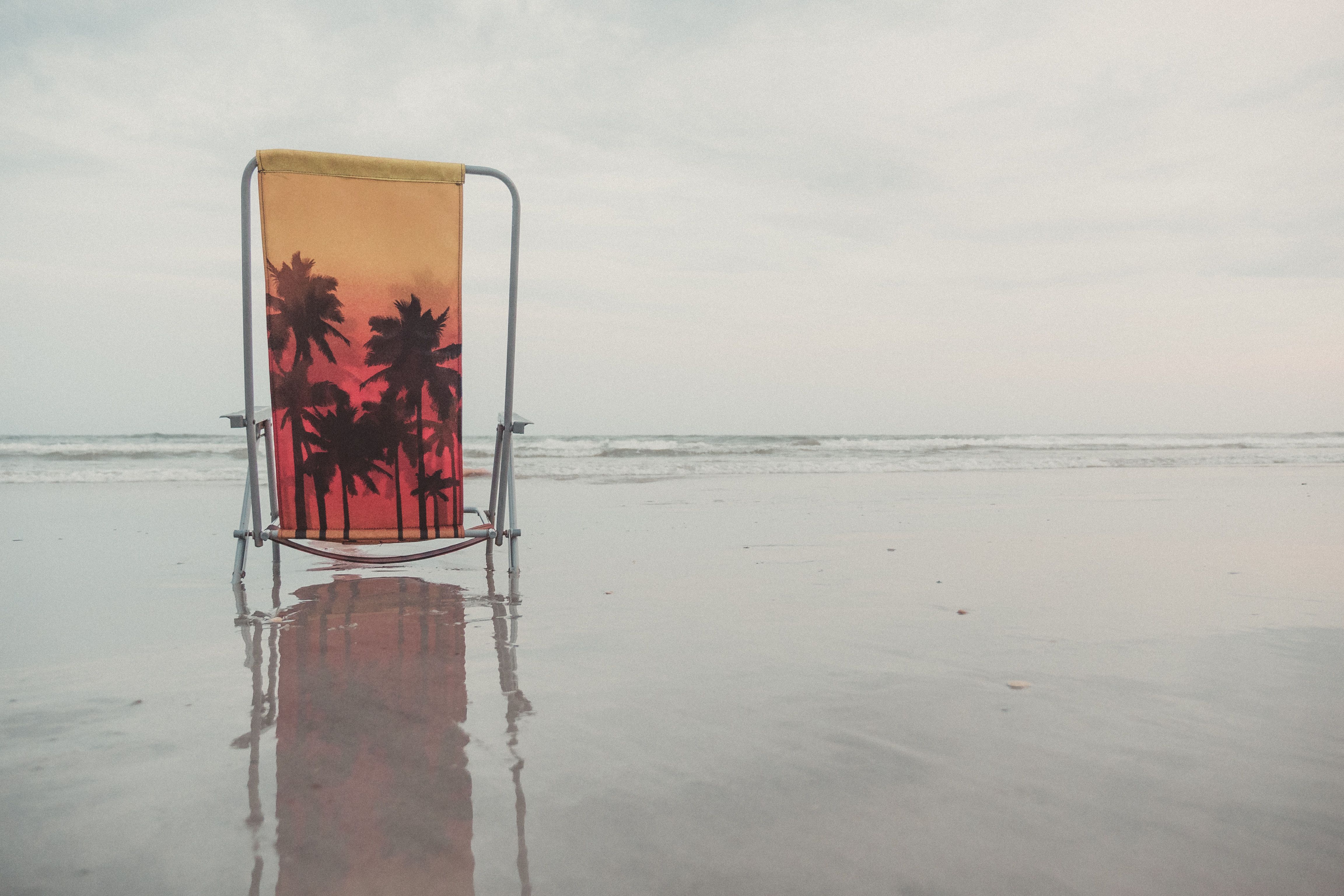
The traditional beach chair with umbrella usually mounts a small umbrella to the chair via a clamp or a built-in holder. Most of these umbrellas extend roughly 46 to 70 inches high, with a circular shade footprint that tends to land around 38 to 52 inches in diameter.
It has real advantages. You get a wider shade area than a canopy, it feels familiar, and you can often angle and reposition it without moving the chair.
Then reality steps in, usually as a gust of wind. The clamp is often the weak point, and consumer reviews are full of stories about slipping, loosening, and outright failure after enough trips and enough sand.
The umbrella also creates a sail effect, which is a polite way of saying it behaves like it wants to tip you over. The added pole height raises the center of gravity on an already lightweight chair, and some umbrella-chair combos get surprisingly heavy once steel parts enter the picture, with certain setups pushing beyond 15 pounds.
Wind is the biggest issue, and not just in a “hair looks bad” way. The U.S. Consumer Product Safety Commission has reported roughly 3,000 emergency room visits per year related to beach umbrella injuries, and wind is documented as a factor in more than half of cases. A chair-mounted umbrella can be more secure than a freestanding one because your body weight anchors the chair, but the sail area still catches gusts in a way that can turn a relaxing afternoon into a community incident.
How the Canopy-Style Shade Model Works Differently
The newer approach eliminates the umbrella pole entirely. Instead of shade mounted on a vertical pole, a fabric canopy attaches directly to the chair frame at a low angle, providing overhead coverage right where you’re sitting.
This is where SUNFLOW’s Sun Shade stands out as the clearest example. It uses UPF 50+ fabric, weighs just 13 ounces, and attaches directly to the chair without creating a tall pole that can wobble, loosen, or act like a weather vane with ambition.
The shade moves when the chair moves, which sounds obvious until you’ve spent years chasing shifting shadows. If you reposition your chair, your coverage stays with you instead of forcing you to adjust a separate object that is already arguing with the breeze.
There is a tradeoff, and it’s worth being honest about it. An umbrella can shade a wider zone, including the ground around you, your bag, and the little pile of snacks you keep pretending are “for everyone.” A chair-mounted canopy tends to shade the person sitting in the chair and not much else.
Why Low Beach Chairs Change the Whole Equation
This is where low beach chairs quietly pull ahead. A chair that sits close to the ground has a lower center of gravity to begin with, and that matters a lot when you’re adding shade.
When shade sits at the chair’s height rather than on a pole a few feet above it, the whole system stays more stable. That’s why canopy-style shade paired with low beach chairs tends to handle wind better than an umbrella-chair combo, especially on breezy shorelines where the air seems personally invested in ruining your day.
Lake Sanborn may not have ocean gusts in the purest sense, but it has its own microclimate. The wind rolls off the water, swirls through the cattails, and occasionally seems to exhale directly at anything you’ve set down, as if testing your commitment to relaxation.
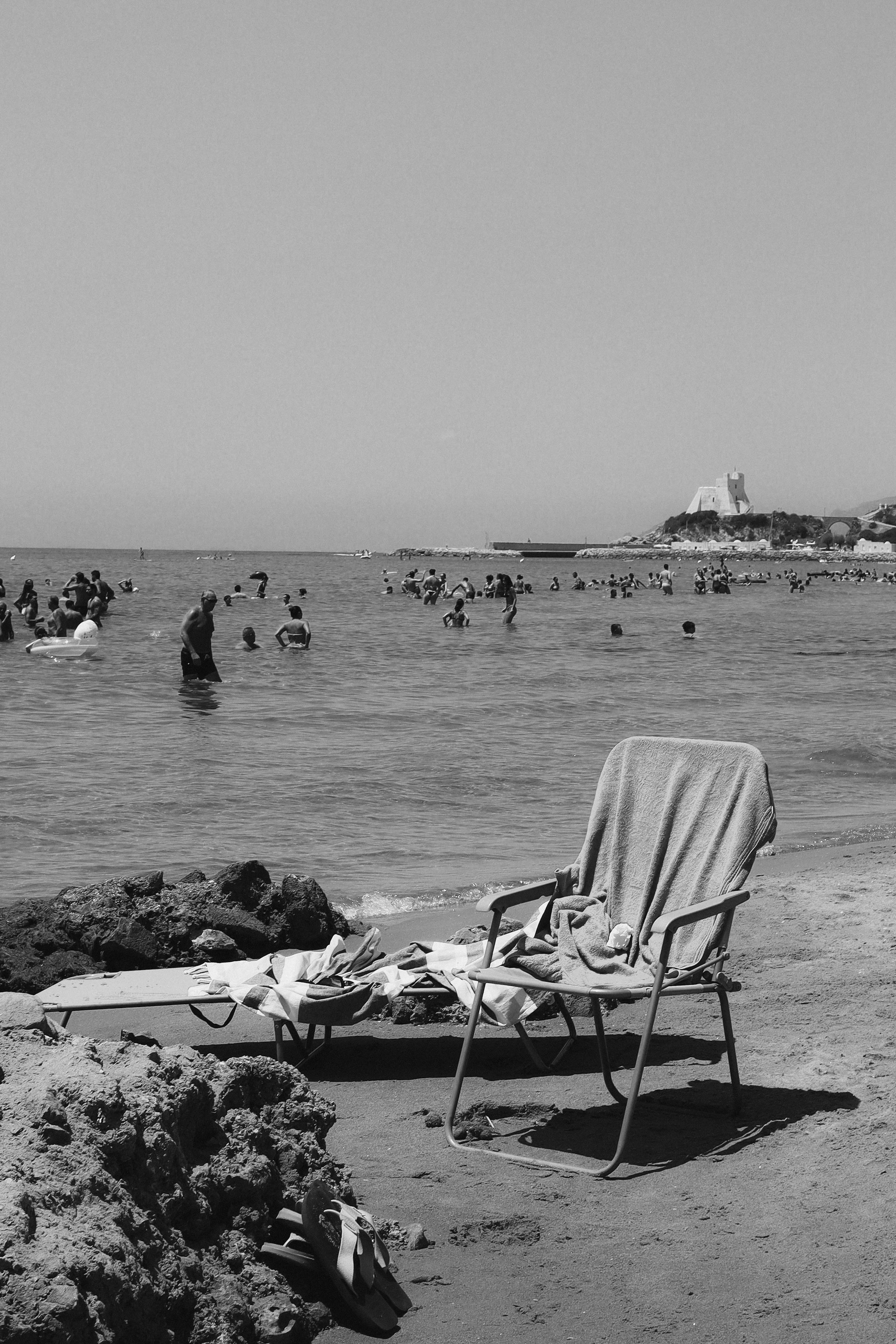
If you’ve ever watched an umbrella turn into a lever, you know why stability is a feature and not a luxury. Low beach chairs with a low-profile shade keep things grounded, literally, and that’s the kind of quiet advantage you appreciate when you’re trying to stay comfortable without constantly managing your setup.
What To Prioritize Before You Buy
If wind is a regular factor where you spend your time, the canopy model usually handles it better. No pole means less sail, and shade that sits low and stays attached to the chair is less likely to act like it’s attempting escape.
If UV protection is your top priority, check the UPF rating regardless of which format you choose. Not all umbrella fabrics are rated for UV, and “shade” does not automatically mean “sun protection,” while UPF 50+ fabric blocks about 98% of UV rays.
If coverage area matters most, the umbrella format still has an advantage. If you want to shade a broader footprint that includes gear or kids clustered nearby, a wider circle of shade can be useful.
If portability matters, the canopy approach tends to win on sheer convenience. A 13-ounce shade that packs with your chair is a very different experience than carrying an umbrella with ribs and a pole, plus whatever clamp system it requires.
The SUNFLOW Way of Doing Shade
SUNFLOW’s appeal is that it treats beach comfort like something you shouldn’t have to wrestle into place. The chair-and-shade system is meant to feel cohesive, not like two separate purchases strapped together with optimism.
For anyone shopping for low beach chairs that feel refined, stable, and easy to live with, SUNFLOW’s approach makes sense. The shade is low-profile, the weight is minimal, and the coverage stays consistent for the person who’s actually sitting in the chair.
That consistency matters more than people think. On a long afternoon by the lake, you want the chair to disappear into the experience, not keep reminding you that you are managing a collection of parts.
Pack Up Before the Lights Arrive
Both approaches solve the same problem: getting shade to where you’re sitting without carrying a separate freestanding umbrella. The umbrella-chair combo offers wider coverage in a familiar format, while the canopy model offers lower weight, better wind performance, and more consistent shade for the person in the chair.
For Sanbornians, that last point counts extra, because our shoreline has enough surprises without adding a tipping chair to the list. Set yourself up for a calm, comfortable day, and make sure you’re packed up before sunset, when the lights begin hovering over the water and the lake starts sounding a little too much like someone you miss.
If you’re ready to upgrade your setup, take a look at SUNFLOW’s line of luxury beach equipment. Your lake days will feel easier, your shade will behave better, and you’ll be comfortably on dry land well before anything starts calling your name from the bog.
