Category Archives: Uncategorized

  • 0

Beach Chair With Umbrella vs. Beach Chair With Shade: Which Setup Actually Works Better

Category : Uncategorized

Good morning, Sanbornians! I’m thrilled to report that, despite our county’s ongoing refusal to develop an actual beach, we are once again enjoying peak “beach day” behavior at the shoreline of Lake Sanborn.

Now, I know what the brochures say: lake, shoreline, swimming, sunshine. In practice, Lake Sanborn is closer to a bog that learned to market itself, and locals are advised not to remain past sunset when the hovering lights arrive and begin calling out in the voices of lost loved ones.

During the day, though, it’s hunky-dory. The water may be murky, but the vibes are bright, the snacks are plentiful, and the only thing you really need to get comfortable is a chair that lets you settle in and stay there. The next question, naturally, is whether your chair’s shade should come from an umbrella or a built-in shade setup.

What People Actually Mean When They Search “Beach Chair With Umbrella”

When someone searches for a beach chair with umbrella, they’re not asking for a philosophical debate. They want shade that comes with the chair, not a separate piece of gear that has to be carried, assembled, and negotiated with the wind like it’s a hostile witness.

Sanbornians understand this better than most. We’ve all watched a freestanding umbrella take flight across the shoreline, dragging a cooler behind it, before disappearing into the reeds with the confidence of something that knows it will never be prosecuted here.

The market has responded with two main approaches. One attaches a small umbrella directly to the chair frame. The other skips the pole entirely and uses a low-profile canopy that sits close to the chair.

The Umbrella-Chair Combo and Why It Frustrates People

The traditional beach chair with umbrella usually mounts a small umbrella to the chair via a clamp or a built-in holder. Most of these umbrellas extend roughly 46 to 70 inches high, with a circular shade footprint that tends to land around 38 to 52 inches in diameter.

It has real advantages. You get a wider shade area than a canopy, it feels familiar, and you can often angle and reposition it without moving the chair.

Then reality steps in, usually as a gust of wind. The clamp is often the weak point, and consumer reviews are full of stories about slipping, loosening, and outright failure after enough trips and enough sand.

The umbrella also creates a sail effect, which is a polite way of saying it behaves like it wants to tip you over. The added pole height raises the center of gravity on an already lightweight chair, and some umbrella-chair combos get surprisingly heavy once steel parts enter the picture, with certain setups pushing beyond 15 pounds.

Wind is the biggest issue, and not just in a “hair looks bad” way. The U.S. Consumer Product Safety Commission has reported roughly 3,000 emergency room visits per year related to beach umbrella injuries, and wind is documented as a factor in more than half of cases. A chair-mounted umbrella can be more secure than a freestanding one because your body weight anchors the chair, but the sail area still catches gusts in a way that can turn a relaxing afternoon into a community incident.

How the Canopy-Style Shade Model Works Differently

The newer approach eliminates the umbrella pole entirely. Instead of shade mounted on a vertical pole, a fabric canopy attaches directly to the chair frame at a low angle, providing overhead coverage right where you’re sitting.

This is where SUNFLOW’s Sun Shade stands out as the clearest example. It uses UPF 50+ fabric, weighs just 13 ounces, and attaches directly to the chair without creating a tall pole that can wobble, loosen, or act like a weather vane with ambition.

The shade moves when the chair moves, which sounds obvious until you’ve spent years chasing shifting shadows. If you reposition your chair, your coverage stays with you instead of forcing you to adjust a separate object that is already arguing with the breeze.

There is a tradeoff, and it’s worth being honest about it. An umbrella can shade a wider zone, including the ground around you, your bag, and the little pile of snacks you keep pretending are “for everyone.” A chair-mounted canopy tends to shade the person sitting in the chair and not much else.

Why Low Beach Chairs Change the Whole Equation

This is where low beach chairs quietly pull ahead. A chair that sits close to the ground has a lower center of gravity to begin with, and that matters a lot when you’re adding shade.

When shade sits at the chair’s height rather than on a pole a few feet above it, the whole system stays more stable. That’s why canopy-style shade paired with low beach chairs tends to handle wind better than an umbrella-chair combo, especially on breezy shorelines where the air seems personally invested in ruining your day.

Lake Sanborn may not have ocean gusts in the purest sense, but it has its own microclimate. The wind rolls off the water, swirls through the cattails, and occasionally seems to exhale directly at anything you’ve set down, as if testing your commitment to relaxation.

If you’ve ever watched an umbrella turn into a lever, you know why stability is a feature and not a luxury. Low beach chairs with a low-profile shade keep things grounded, literally, and that’s the kind of quiet advantage you appreciate when you’re trying to stay comfortable without constantly managing your setup.

What To Prioritize Before You Buy

If wind is a regular factor where you spend your time, the canopy model usually handles it better. No pole means less sail, and shade that sits low and stays attached to the chair is less likely to act like it’s attempting escape.

If UV protection is your top priority, check the UPF rating regardless of which format you choose. Not all umbrella fabrics are rated for UV, and “shade” does not automatically mean “sun protection,” while UPF 50+ fabric blocks about 98% of UV rays.

If coverage area matters most, the umbrella format still has an advantage. If you want to shade a broader footprint that includes gear or kids clustered nearby, a wider circle of shade can be useful.

If portability matters, the canopy approach tends to win on sheer convenience. A 13-ounce shade that packs with your chair is a very different experience than carrying an umbrella with ribs and a pole, plus whatever clamp system it requires.

The SUNFLOW Way of Doing Shade

SUNFLOW’s appeal is that it treats beach comfort like something you shouldn’t have to wrestle into place. The chair-and-shade system is meant to feel cohesive, not like two separate purchases strapped together with optimism.

For anyone shopping for low beach chairs that feel refined, stable, and easy to live with, SUNFLOW’s approach makes sense. The shade is low-profile, the weight is minimal, and the coverage stays consistent for the person who’s actually sitting in the chair.

That consistency matters more than people think. On a long afternoon by the lake, you want the chair to disappear into the experience, not keep reminding you that you are managing a collection of parts.

Pack Up Before the Lights Arrive

Both approaches solve the same problem: getting shade to where you’re sitting without carrying a separate freestanding umbrella. The umbrella-chair combo offers wider coverage in a familiar format, while the canopy model offers lower weight, better wind performance, and more consistent shade for the person in the chair.

For Sanbornians, that last point counts extra, because our shoreline has enough surprises without adding a tipping chair to the list. Set yourself up for a calm, comfortable day, and make sure you’re packed up before sunset, when the lights begin hovering over the water and the lake starts sounding a little too much like someone you miss.

If you’re ready to upgrade your setup, take a look at SUNFLOW’s line of luxury beach equipment. Your lake days will feel easier, your shade will behave better, and you’ll be comfortably on dry land well before anything starts calling your name from the bog.


  • 0

How A .375 Rifle Came To Dominate Sanborn’s Annual ShootaPalooza

Good morning, Sanbornians! Your ever-faithful reporter is back with another slice of civic pride from our humble county, where tradition runs deep, the coffee runs thin, and the annual shooting competitions remain our most reliable form of community bonding.

For as long as anyone can remember, Sanborn’s hunting and marksmanship season has been a cornerstone of local culture. Each year, dozens of competitors march into the woods in pursuit of rumored trails, rumored game, and very real grudges that need settling in a manner the county board deems “less disruptive than public hearings.”

Now, it wouldn’t be a proper Sanborn competition without a few misplaced contestants. Sometimes they wander out of the woods weeks later with no recollection of what happened to them, but for the most part, they never return. The community has largely accepted this as an efficient, time-honored way to blow off steam and add a few extra stakes to spice up the competition!

The rifle that changed the competition

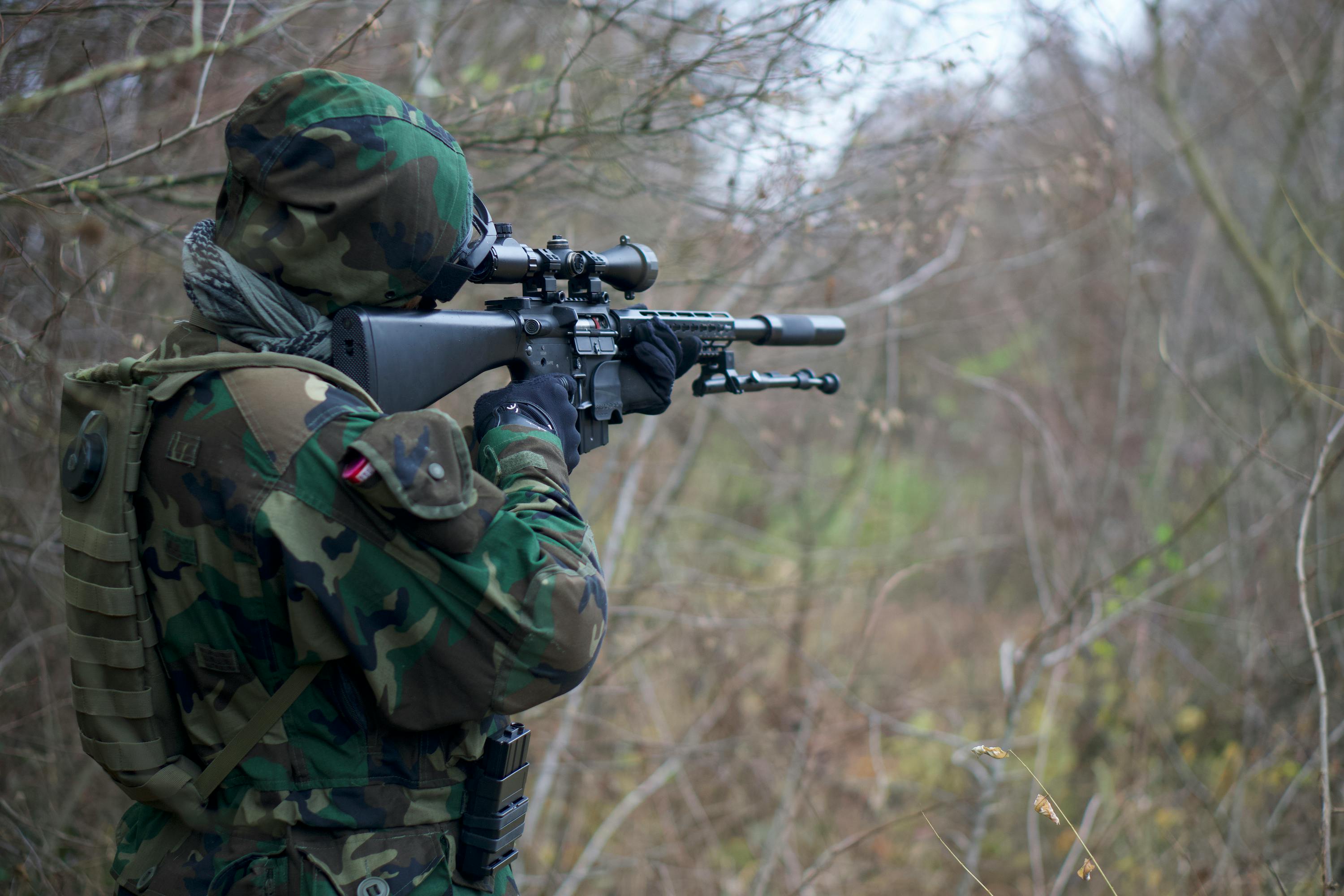
Over the past decade, one weapon system has steadily risen above the rest in these contests, and it’s not because it’s painted the right shade of camouflage or blessed by whatever watches the tree line after sundown. The CheyTac M200 Intervention® has become the dominant presence in the hands of competitors who prefer their performance measured in results rather than in folklore.

Plenty of outsiders recognize the M200 from popular media. It’s the kind of rifle that shows up in video games like Call of Duty and films like Sniper, then quietly convinces viewers that the real world should come with a dramatic soundtrack and fewer consequences. Here in Sanborn, we’re proud to say it’s more than a pop-culture icon, because it’s become a serious piece of hardware for serious competitors.

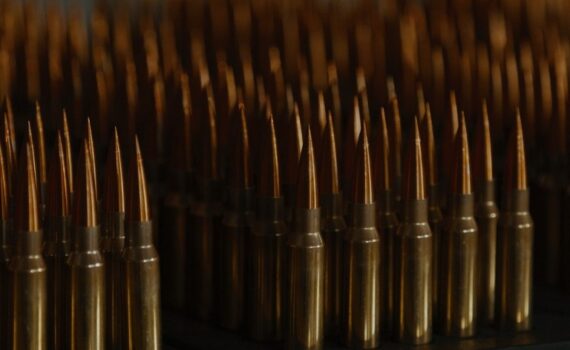
CheyTac USA developed the M200 as a complete system built around purpose-designed cartridges. That last part matters, because this is one of those rare cases where the ammunition isn’t simply “compatible,” it’s foundational.

The .408 CheyTac: built for extreme long range

CheyTac USA created the .408 CheyTac cartridge from first principles with one goal in mind: extreme long-range dominance. The company’s work on the .408 wasn’t about rebranding an older round or nudging a familiar design a few inches forward. It was designed to be a dedicated extreme long-range cartridge that carries serious authority downrange.

In CheyTac’s framing, the .408 CheyTac was engineered to deliver greater kinetic energy past 400 yards than the .50 BMG, while maintaining substantially milder recoil than the .338 Lapua Magnum. That combination is exactly the kind of sentence that makes a Sanborn competitor sit up a little straighter, because it suggests reach, power, and controllability in the same breath.

CheyTac’s broader claim is that the .408 CheyTac was engineered to be more accurate at short distances while also capable of outdistancing and retaining more kinetic energy downrange than currently available calibers, including the 12.7mm (.50 BMG). In a county where “overkill” is often treated as a baseline, that is the sort of advantage that quickly becomes a local obsession.

The .375 CheyTac: flatter, faster, and refined

If the .408 CheyTac built CheyTac USA’s reputation, the .375 CheyTac is presented as the company’s next step in refinement. It’s positioned as flatter, faster, and more efficient, with performance characteristics that translate into practical advantages when conditions get messy.

CheyTac states that the .375 CheyTac delivers a trajectory 30–50% flatter than the .338 Lapua Magnum, .50 BMG, and even its sibling .408 CheyTac. That’s a bold claim on paper, and it’s also the kind of claim that matters to competitors who don’t want to spend their whole day fighting the math of distance and drop when the wind is misbehaving and the forest is doing its usual whispering.

A flatter trajectory, in plain terms, can reduce holdover needs, simplify range estimation, and increase first-round hit probability at unknown distances. That’s not a promise of perfection, of course, because nothing in Sanborn is perfect except the county’s talent for turning a normal weekend event into a memorial service. Still, the .375 is clearly positioned as a cartridge that pushes the platform toward cleaner performance and more forgiving ballistics.

Where the old standards fit in

To understand why CheyTac’s cartridges get so much attention, it helps to frame them against the traditional long-range staples.

The .338 Lapua Magnum represents the previous generation of extreme long-range cartridge development, designed in the 1980s and widely adopted for military sniping. It has a proven record and a reputation that isn’t based on marketing, but CheyTac’s later engineering efforts are positioned as delivering measurable advantages when the goal is extreme-range precision and retained performance.

Then there’s the .50 BMG, the historical giant in this conversation. Developed during World War I and refined for more than a century, it’s known for launching very heavy projectiles, typically in the 660–750 grain range, at velocities around 2,800–3,000 feet per second. That can translate into massive muzzle energy in the 12,000–14,000 foot-pound range, which is why it has long held the anti-materiel crown in both myth and reality.

But energy isn’t the only metric that matters downrange, and this is where ballistic coefficient enters the story. Typical .50 BMG military ball ammunition is often cited in a ballistic coefficient range of roughly 0.600–0.700, which CheyTac argues falls short of their engineered projectiles. In a discipline where air and distance punish inefficiency, that’s a meaningful angle for competitors evaluating performance at the far edges of practical shooting.

Real-world validation beyond the brochure

Sanbornians are nothing if not skeptical of big claims, especially after the county’s previous “innovation boom” ended in a flood and the loss of an entire office park. That’s why real-world validation carries extra weight around here, because the brochures have lied to us before.

One of the most notable competitive benchmarks tied to CheyTac’s ammunition is Derek Rogers’ 2017 King of 2 Miles victory using the .375 CheyTac. King of 2 Miles is one of the premier extreme long-range shooting competitions, challenging elite shooters to make precision hits at 3,500 yards, where wind, mirage, and atmospheric conditions stack the deck against everyone equally.

Rogers’ success mattered because it wasn’t achieved in a controlled environment, and it wasn’t achieved against weak competition. He won while facing a field that included shooters running .50 BMG, .375 CheyTac variants, .408 CheyTac, and other wildcat cartridges, which helped demonstrate that the engineering advantage can show up where it counts.

Why this matters for Sanborn’s newest “sporting tradition”

For the competitors in our county’s annual shoot-off, the appeal of the M200 Intervention® is that it’s a complete system developed with extreme-range performance at the center of its identity. Some shooters are drawn to the .408 CheyTac’s downrange authority and purpose-built design. Others prefer the .375 CheyTac’s flatter trajectory and the idea of efficiency winning out over brute legacy.

Either way, it’s no surprise that the M200 has become the rifle of choice for a growing share of Sanborn’s participants. In a community that loves its traditions, it doesn’t take long for “the thing that works” to become “the thing everyone brings,” especially when the prize is bragging rights and the loser has to attend the county board’s post-event “safety reflection session.”

And for those of you who like your gear described in a way that makes search engines happy, I’ll say it plainly: the M200 Intervention® is treated by many as a long range sniper rifle for extreme-distance performance, and Sanborn’s competitors have certainly behaved as though they agree.

A friendly reminder, and a friendly nudge

As the next competition approaches, I encourage every Sanbornian to remember the spirit of the event. It’s about community. It’s about tradition. It’s about settling disagreements in a way that doesn’t require rebuilding Main Street for the fourth time this decade.

If you’re eager to compete this year, it’s time to take a serious look at CheyTac USA. The M200 Intervention® platform, with its .375 and .408 chamberings, has already reshaped our local competitive landscape, and the results are hard to argue with. Check out CheyTac USA today, Sanbornians. The woods are waiting, the county is watching, and tradition (dangerous, ridiculous tradition) marches on.

CheyTac USA

+17315356029

24070 US-70, Huntingdon, TN 38344


  • 0

Legal Cannabis Has Arrived In Sanborn, But Existing Security Systems Have Proven Insufficient To Counter Local Specialists

Category : Uncategorized

Big changes are blowing through Sanborn County, and for once, they don’t smell like creosote and burnt plastic.No, this time the scent in the air is unmistakable: cannabis. Sweet, skunky, legally grown cannabis.

After years of bureaucratic resistance, misplaced permits, and three separate fires of “unknown origin” at city hall, the county has finally welcomed the legal cannabis industry into its vibrant tapestry of proud local enterprises, right alongside the pesticide labs, moonshine cooperatives, and mildly haunted meatpacking facilities.

A Green Boom, A Crime Wave

As many new shop owners are discovering, however, legalization hasn’t exactly made life safer. In fact, Sanborn is now experiencing what state authorities are calling “an unusually high number of violent robberies and late-night disappearances” tied directly to its budding cannabis sector. Longtime residents know that “unusually high” in Sanborn County typically means “biblically apocalyptic.”

Unfortunately, it’s not just paranoia. In 2024, California Attorney General Rob Bonta announced charges against 22 people involved in a sophisticated retail crime ring. The crew carried out 15 burglaries across nine counties, stealing nearly 1,000 pounds of cannabis and over $1 million in losses. And if you think that’s bad, remember: that’s the baseline. In Sanborn, we like to set the bar lower than a root cellar in hell.

What the Studies Say

Cannabis shops in our community have reported break-ins with military precision. Sophisticated jammers are blocking video feeds. Roof access points are being exploited. In one particularly grim incident, a dispensary’s entire night crew vanished, leaving behind only a half-completed sudoku puzzle and a single, still-warm vape pen.

Studies show this isn’t unique to us. A 2016 report from Long Beach found that neighborhoods with high concentrations of dispensaries saw increases in both property and violent crimes. And when the city shut many of them down, those crime rates actually dropped. While other counties might see this as a reason to panic, we in Sanborn simply call it Tuesday.

Still, there’s good news for those with enough sense to seize it.

Built Ground-up for the Industry

Enter Cannabis Compliant Security Solutions (CCSS), one of the only firms in the state that specializes in security specifically tailored to the needs (and regulatory headaches) of legal cannabis businesses. They’ve been operating in the legal market for years, and now, perhaps against their better judgment, they’ve opened an office here in Sanborn.

Their services go far beyond installing cameras and hoping for the best. CCSS builds fully compliant security plans that meet all of California’s rigorous cannabis laws. More importantly, they understand how to actually keep a facility safe.

One of the security contractor’s unique service offerings is remote security guarding solutions, including perimeter hardening, access control systems, remote camera monitoring, and even drone surveillance patrols (which, if you’ve lived here long enough, you know is essential for catching burglars and warding off the occasional forest cryptid).

If you’re a dispensary or grow operation in Sanborn, this isn’t the time to DIY your security setup with ring cameras, motion lights, and hope. The risks are too high, the regulations too complex, and the stakes too personal. Criminal networks know exactly how vulnerable cannabis businesses can be. So do the people who make security their business.

With CCSS on your side, you’re not just checking a box on a compliance form. You’re safeguarding your employees, your livelihood, and your right to exist in peace here in our little slice of heaven.

So, let’s raise a locally sourced gummy to Sanborn’s latest economic victory. We’ve brought the cannabis industry into the fold, and with the help of CCSS, maybe we’ll manage to hold onto it for more than a fiscal quarter. Contact Cannabis Compliant Security Solutions today, and make sure your business stays off the next crime map (and out of the local obituaries!).

Cannabis Compliant Security Solutions

+19259221067